Some students in class have asked for additional information on several of the topics in this chapter.
SWAP FILE (PAGING FILE)
Swap file
Swap file
What is a swap file?
In Windows what is a swap file?
What is the page file for?
Understanding Windows Vista Paging File Size
Paging - information of a more technical nature
TYPES OF RAM
Types of RAM - from HowStuffWorks.com
Different RAM Types and its uses
Types of RAM and ROM
Types of RAM: How to Identify and their Specifications
FLASH MEMORY
What is flash memory?
How flash memory works
Flash memory - from Wikipedia
Tuesday, October 28, 2008
Norton, Lesson 7: Transforming Data into Information
 You should now be completing the worksheet for Norton, Lesson 7: Transforming Data into Information.
There will be a test on Thursday.

Wednesday, October 1, 2008
Ch. 5 exercises
You are now ready to write your first computer programmes!
For the next few classes everyone should be working only on the exercises at the end of Chapter 5.
Easy exercises
#4, 5, 7, 8, 9, 10, 11, 12
Moderately Difficult Exercises
#1, 2, 6, 13 (somewhat long), 14 (somewhat long), 15
More Challenging Exercises
#3
For the next few classes everyone should be working only on the exercises at the end of Chapter 5.
Easy exercises
#4, 5, 7, 8, 9, 10, 11, 12
Moderately Difficult Exercises
#1, 2, 6, 13 (somewhat long), 14 (somewhat long), 15
More Challenging Exercises
#3
Friday, September 26, 2008
Homework before next class - finish notes for Turing Ch. 5
 All notes for Chapter 5 (Variables and Constants) should be completed before the start of next class, Tuesday.
 If you have not finished your notes for Ch. 5 yet and have to work at home, you may find it easiest to print the questions, then write the answers using pen or pencil.
There will be a homework check at the start of Tuesday's class, and it will form a part of your November report card mark.
During Tuesday's class everyone should be working on the exercises at the end of Chapter 5, writing programs in Turing.
Remember - when you work steadily in class without being distracted, you have less to do for homework.
Fri., Sept. 26 - Guest speakers

Sandy Graham and Dan Brown from the University of Waterloo will visit to present an activity on Data Compression and to talk about the university.
(Actually, Dan Brown came and spoke about what kind of work people do who have a degree in computer science.)
Tuesday, September 23, 2008
Turing, Ch. 5: Variables and Constants
The topic of variables and constants is not difficult, but it's important to learn it well in order to continue with programming.
Work on Chapter 5 the same way you worked on Chapter 4:
• read the chapter carefully
• make notes from the question sheet in the Pickup Folder
• try the programs as you read
• do the exercises at the end of the chapter
- Become familiar with how to declare a variable using var. For example:
var maxTempDay1 : real - Know the three data types -- int, real, string.
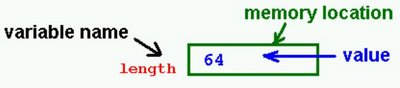
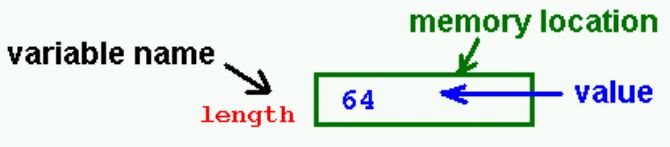
- Try to think of a variable as a named memory location, that is, an area of RAM the computer gives a name and waits for it to be given a value.
Work on Chapter 5 the same way you worked on Chapter 4:
• read the chapter carefully
• make notes from the question sheet in the Pickup Folder
• try the programs as you read
• do the exercises at the end of the chapter
Where to get your copy of Turing
To practise programming at home, you need a copy of the Turing program. Because of license restrictions, we can't give it away publicly through a Web link. However, the teacher will show you in class how to download a copy for your home computer.
-------------------------------------------------------.
schools.tdsb.on.ca/jarvisci/turing/turing.zip
-------------------------------------------------------.
-------------------------------------------------------.
schools.tdsb.on.ca/jarvisci/turing/turing.zip
-------------------------------------------------------.
Subscribe to:
Posts (Atom)